Ah, thought I was done with the quick and easy roasted recipes didn't you? Just one more. I made a nice
salsa verde with roasted
tomatillos for my brother's Memorial Day party.
Tomatillos are in the same family, but a different genus, from the tomato. They look, but do not taste, like green tomatoes.
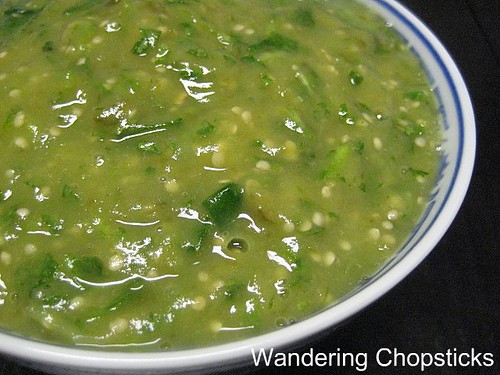 Salsa Verde with Roasted Tomatillos
You'll need:
About 2 lbs
tomatillos, 1 lb will reduce to less than 1 cup after cooking
2 jalapenos, or more if you want spicier
1 small bunch cilantro
1 small bunch green onions
1 lime, juiced
Salt, to taste
Look at all the lovely green to truly make this truly
verde.
Tomatillos in their papery husks, cilantro, jalapenos, and green onions. The green onions are from my garden.
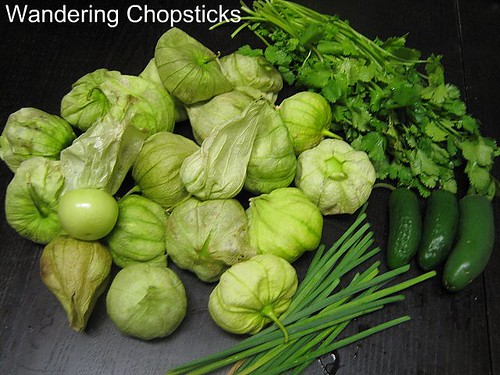 Tomatillos
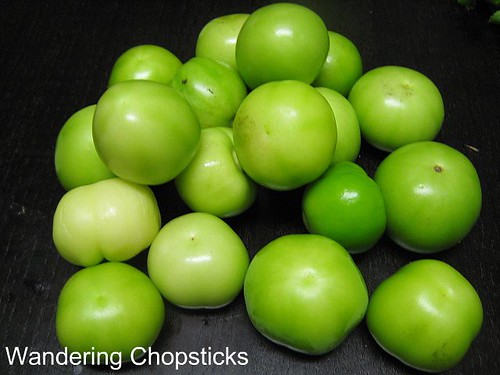
 are surrounded by a papery husk. Look for the freshest and greenest husks as possible. Split open the husks a little to pick firm, smooth
tomatillos. Peel off all the husks and discard.
 Tomatillos
 got their name because people thought they were baby green tomatoes.
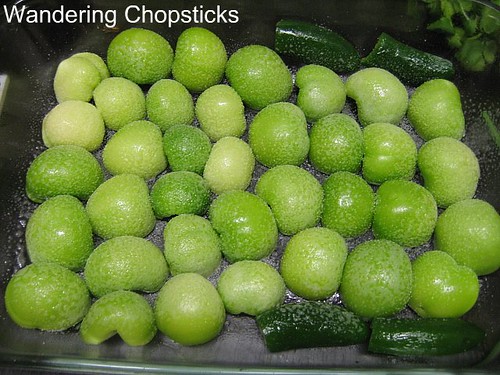
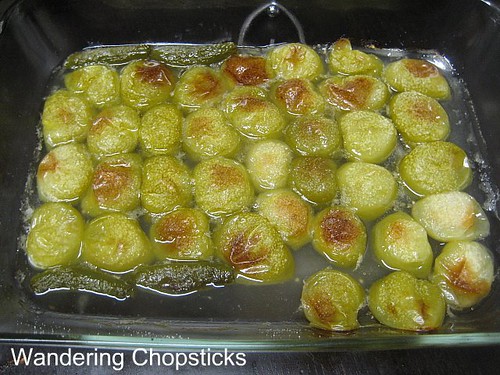
Wash and halve tomatoes. Remove the stems. De-seed and halve the jalapenos. Lightly oil a pan and lay
tomatillos and jalapenos, skin side up. Lightly spray oil and sprinkle a light layer of salt on top. Bake in oven at 350 degrees for about half an hour until
tomatillos are slightly golden.
Meanwhile, wash and roughly chop the bunches of cilantro and green onions.
When the
tomatillos are done, they'll release a lot of liquid so scoop them out with a slotted spoon into a food processor. Add in the jalapenos, chopped cilantro, and chopped green onions. Puree until desired consistency. I like mine roughly smooth. Add juice of one lime. Taste and add salt if necessary.
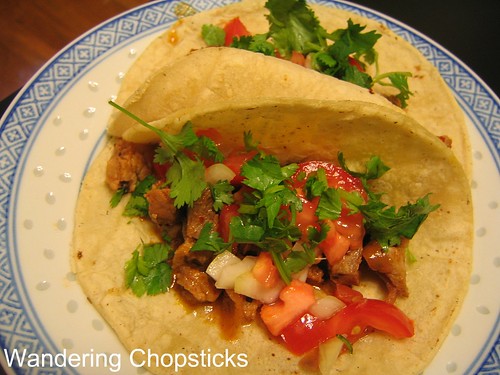
Serve with tortilla chips, or top
Carne Asada (Mexican Grilled Meat) or
Tacos al Pastor (Mexican Shepherd-Style Tacos).

Enjoy!
Other salsa recipes:
Guacamole
Mango Salsa
Salsa Fresca
I brought the
salsa verde to my brother's Memorial Day party. Where it joined the rest of the goodies. There's the oldest '87 making
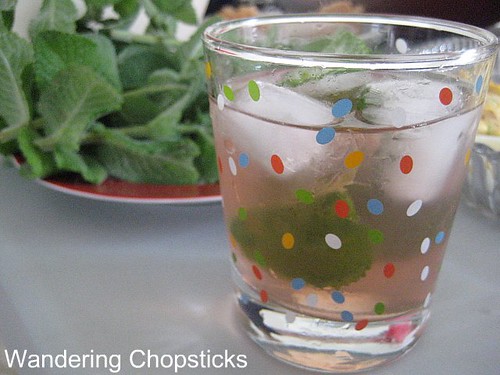
mojitos with fresh apple mint.

That was a pretty fine
mojito.
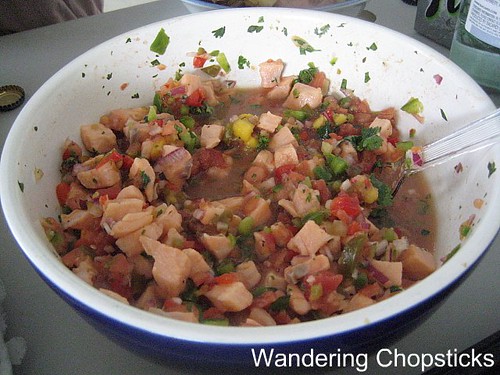
The oldest '88 made salmon ceviche.
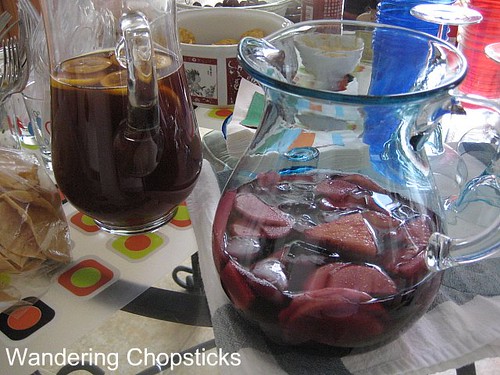
Iced tea and sangria.
Bacon-wrapped hot dogs.

I made some
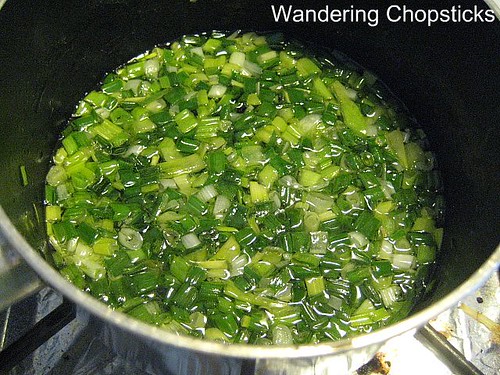
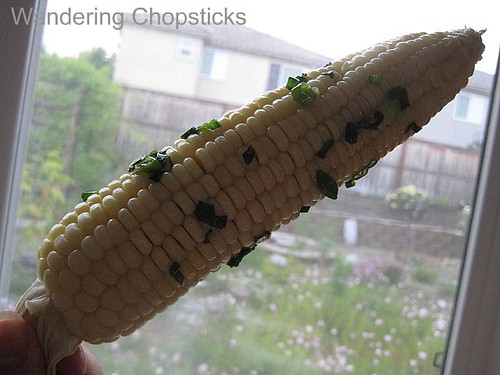
Mo Hanh (Vietnamese Scallion Oil) to slather on the corn.
And the middle '87 made a smooth and creamy cheesecake. So good that when I inquired about leftovers the next day, cousin Q told me my youngest uncle had eaten half a cheesecake. Gone!

*****
1 year ago today,
bulgogi and kalbi (Korean barbecued beef and short ribs).