WARNING: If you're just here for the food, you may not want to read this post. If, however, you're here for me, then carry on.
For those of you who requested more travel stories, well, it's not always about the pretty pictures. Oh, don't worry, you'll eventually get the pretty pictures but later. Later. Perhaps this post will signal the beginning of more random musings. Perhaps not.
I had intended to post more travel stories, but wasn't quite sure where to begin. And then last week, three things converged. It began with a discussion with Oanh of
Halfway Between Ca Mau and Saigon about Cambodian influences on Vietnamese cuisine, and vice versa. My cousin's Cambodian friend, whom we consider an honorary family member, came into town. And Dith Pran, New York Times photographer and Killing Fields survivor, died on March 30 from pancreatic cancer.
But this story, for me anyway, really began almost 30 years ago. In first grade, the only thing I knew about Cambodia was what my friend told me. It was a poor country. Pol Pot and the Khmer Rouge killed many of her family members. And when the milk went sour, she still drank it because food was never wasted. I never really questioned these things. Afterall, Vietnam was also a poor country, my family had also survived a war, and food was a luxury for us too. We probably gravitated toward each other because we were the only Asian refugee kids in the class. (At the time, I was the only one of my cousins in school, and their cousins were in different grades.) She moved away after that year.
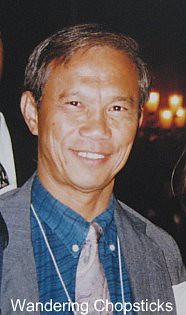
In 1984, when the film "The Killing Fields" aired on television, Cambodia meant countless atrocities and sadness. The Khmer Rouge killed 25% of Cambodia's population, an estimated 1.5 to 2 million people died from starvation, forced labor, or were massacred. Cambodia's population in 1975 was about 7.5 million. The movie is the reenactment of Dith's story, of his escape from Cambodia, and the horrors he witnessed. He coined the term "The Killing Fields." I was honored to meet him in 1997. I'd encourage you to read the
New York Times' obituary and
special section on Dith to gain more insight into this remarkable man.
In college, I volunteered to tutor Southeast Asian (mainly Cambodian) kids at a drop-in center in Chicago's Uptown neighborhood. Many of the kids came from dysfunctional families. Their parents had gambling and alcohol addictions, and untreated psychological trauma from enduring the Killing Fields firsthand.
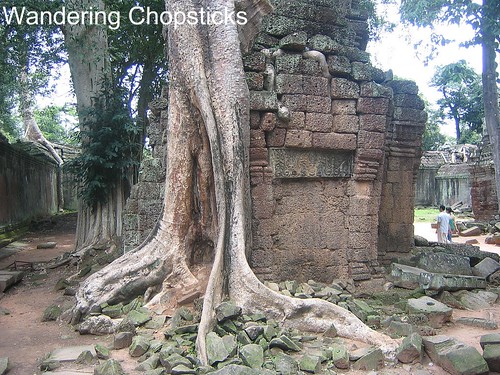
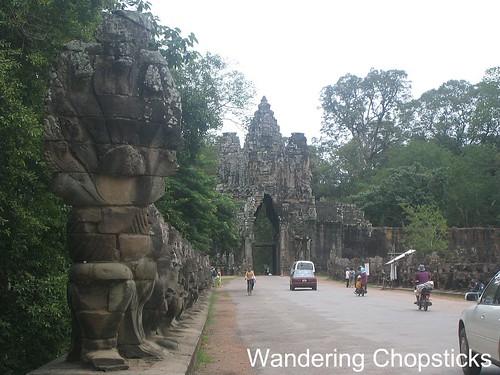
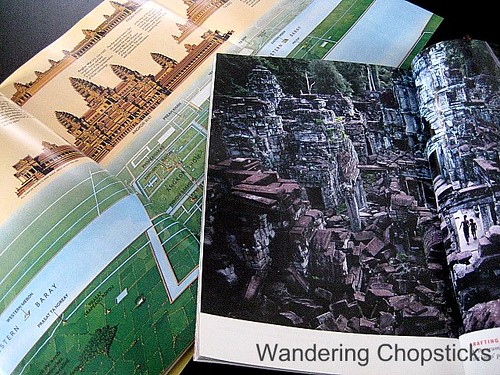
Years and years later, during the summer of 2005 when I was in Vietnam, I and two friends went to Siem Reap, Cambodia for the weekend to explore the Angkor archaeological ruins. (Don't worry, I'll show you see the pretty pictures of Angkor Wat and other temples in later posts.)
I knew about the Tuol Sleng Genocide Museum in Phnom Penh and asked if there was something in Siem Reap as well. On the last day of our trip, our tour guide took us to a Buddhist monastery where skulls and bones of victims of the Killing Fields were laid to rest.